April 10, 2026
earthy colors, family room, home design, interior design, kitchen, kitchen accessories, Kitchen Nook, Light Fixtures, neutral, paint colors, remodel, Styling, textures, tile, white oak
A complete kitchen and family room transformation blending California Transitional design with warm textures, custom cabinetry, and curated details. See how we turned this home into a sanctuary of understated luxury.
Some homes ask to be transformed. Our Rancho Project was one of them; a family home with good bones, wonderful light, and spaces that simply hadn’t caught up to the life being lived inside them. What our clients needed wasn’t just a kitchen remodel or a family room refresh. They needed a connected, flowing environment where gathering felt effortless and beauty felt earned, not forced.
That vision guided every decision from the first design consultation to the final install: a California Transitional remodel that honors the relaxed warmth of West Coast living while embracing the architectural clarity and craftsmanship that defines truly timeless interiors.
The result is a home that feels like it was always meant to look this way.
California Transitional design sits at a compelling intersection. It carries the clean lines and edited restraint of contemporary design, but softens them with organic textures, layered neutrals, and an emphasis on natural materials that feel rooted and lived-in. There’s no stiffness here. No cold minimalism, no fussy traditional detail. Instead, you get warmth with structure. Softness with intention.
For this project, that translated into a palette anchored in creamy whites, warm taupes, and natural wood tones, punctuated by matte black hardware, aged brass accents, and textural surfaces that reward a second look. Every material was selected not just for its beauty in isolation, but for how it would speak to the materials around it; a conversation between finishes that makes the whole feel cohesive rather than curated to within an inch of its life.
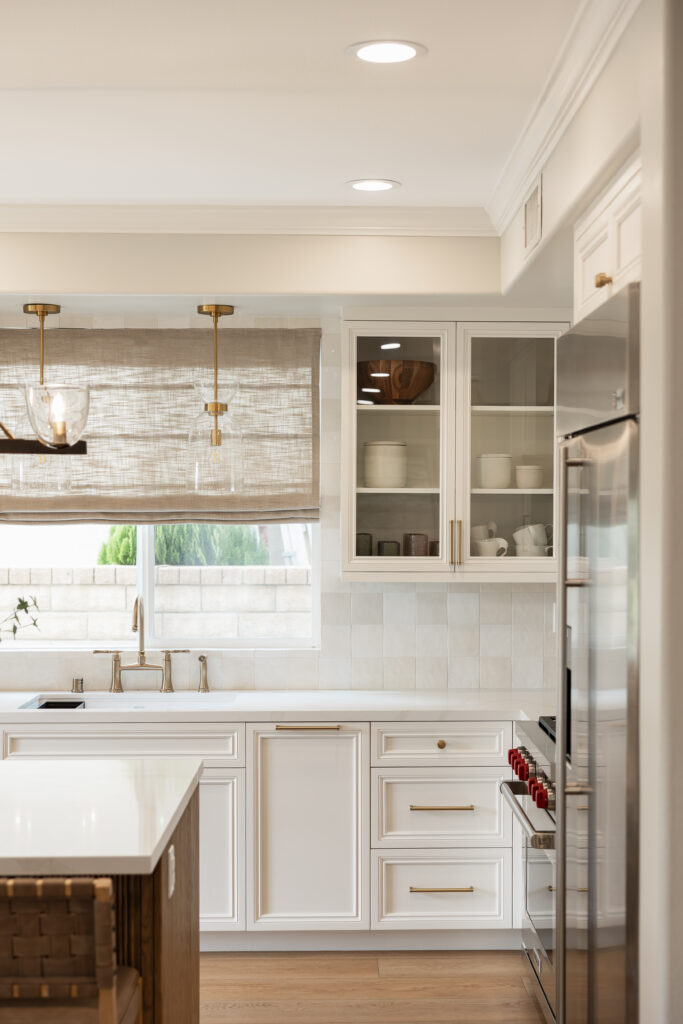
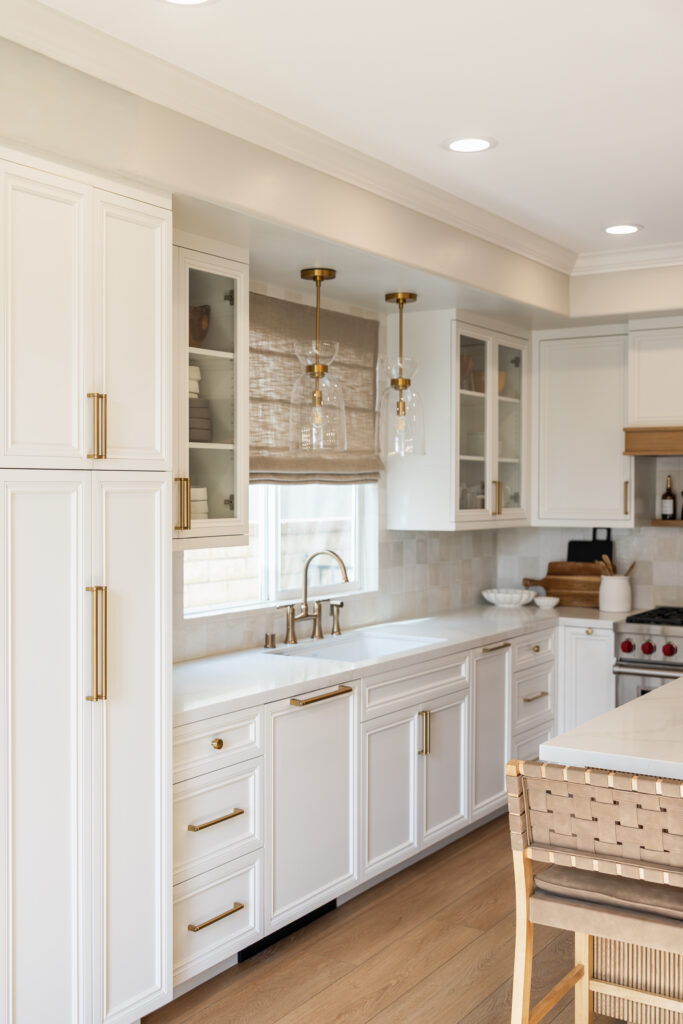
The kitchen is the heart of this remodel, and its foundation is a set of fully custom cabinets that strike the balance this project demanded: architectural presence without visual noise. Upper cabinets in a warm white finish rise toward the ceiling, maximizing storage while drawing the eye upward to emphasize the room’s height.
Inset panel profiles add depth and shadow lines that photograph beautifully but, more importantly, feel beautiful in person. These are cabinets built to last decades, not seasons.

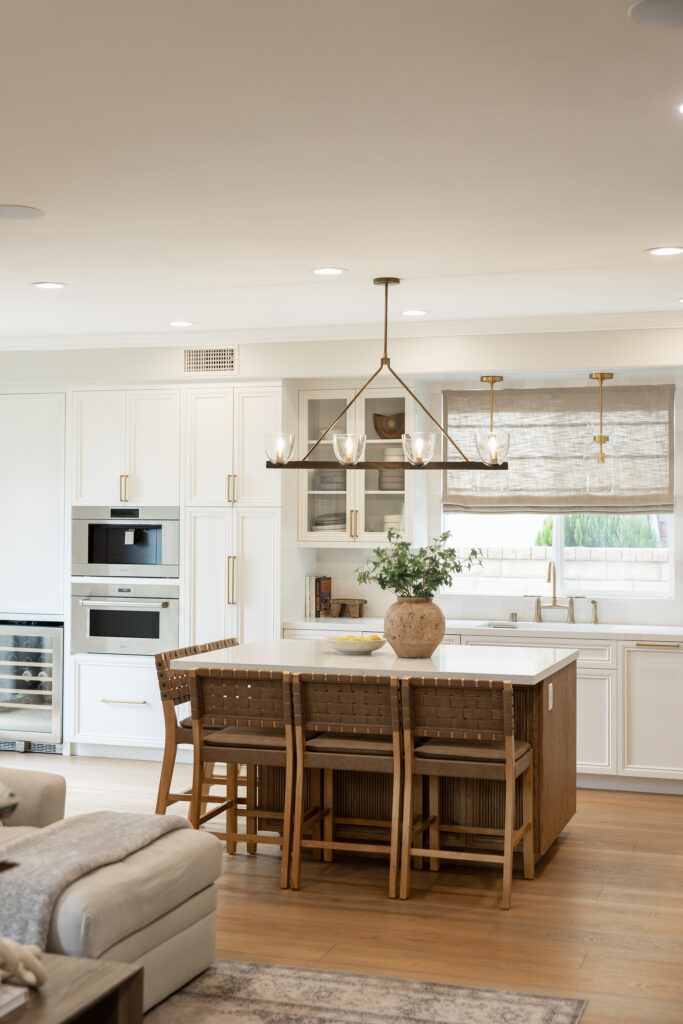
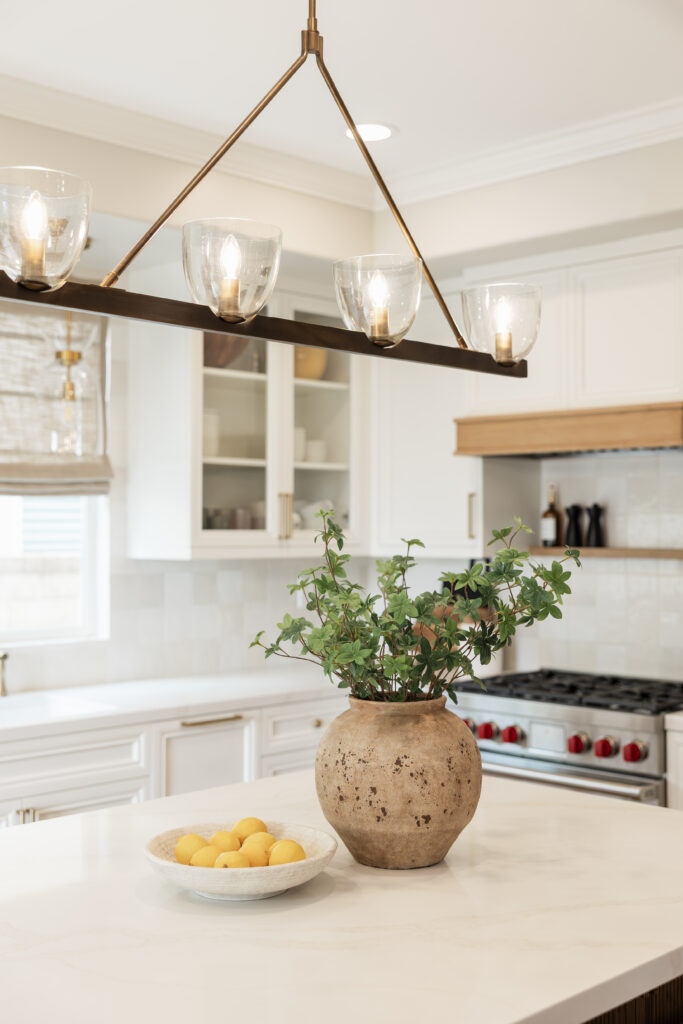
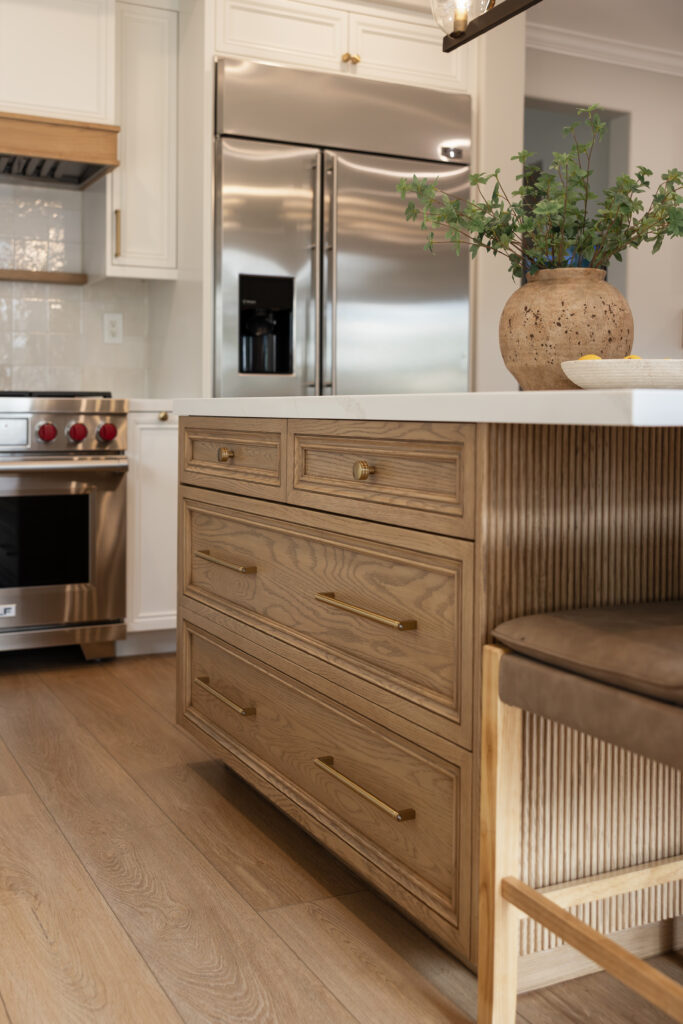
No element in a kitchen remodel carries more design weight than the island, and here it earns every square inch. Generous proportions accommodate casual dining, homework sessions, and prep work simultaneously the functional demands of a real family. The contrasting white oak wood grounds the island as a distinct object within the kitchen rather than a continuation of the perimeter, giving the space a layered, furniture-like quality that elevates the overall design.
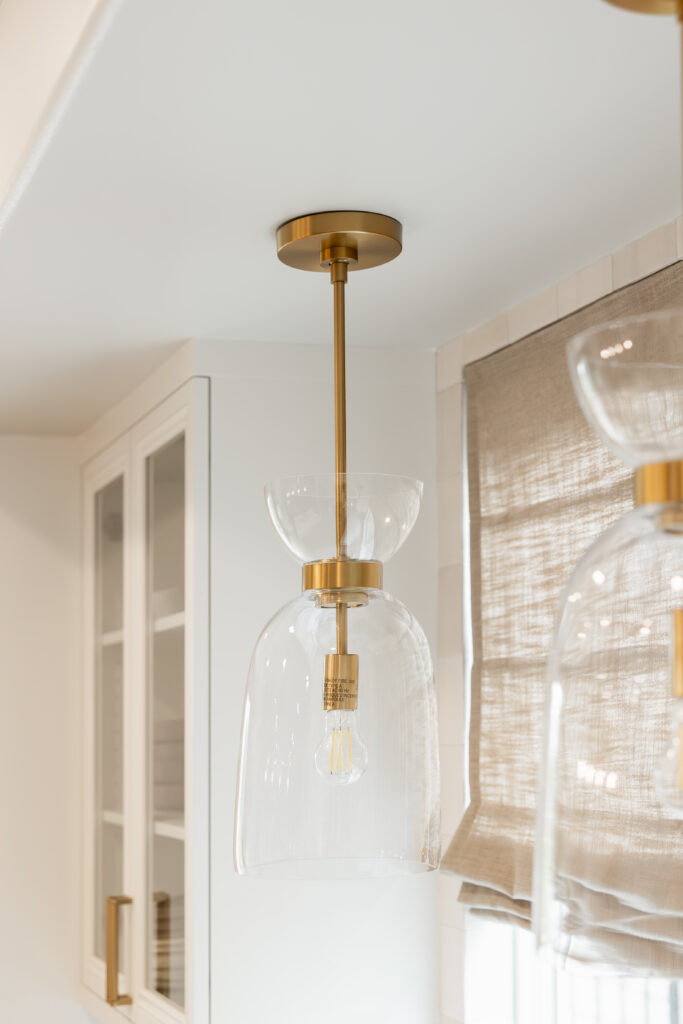
Pendant lighting above the island was selected for its sculptural quality as much as its illumination.
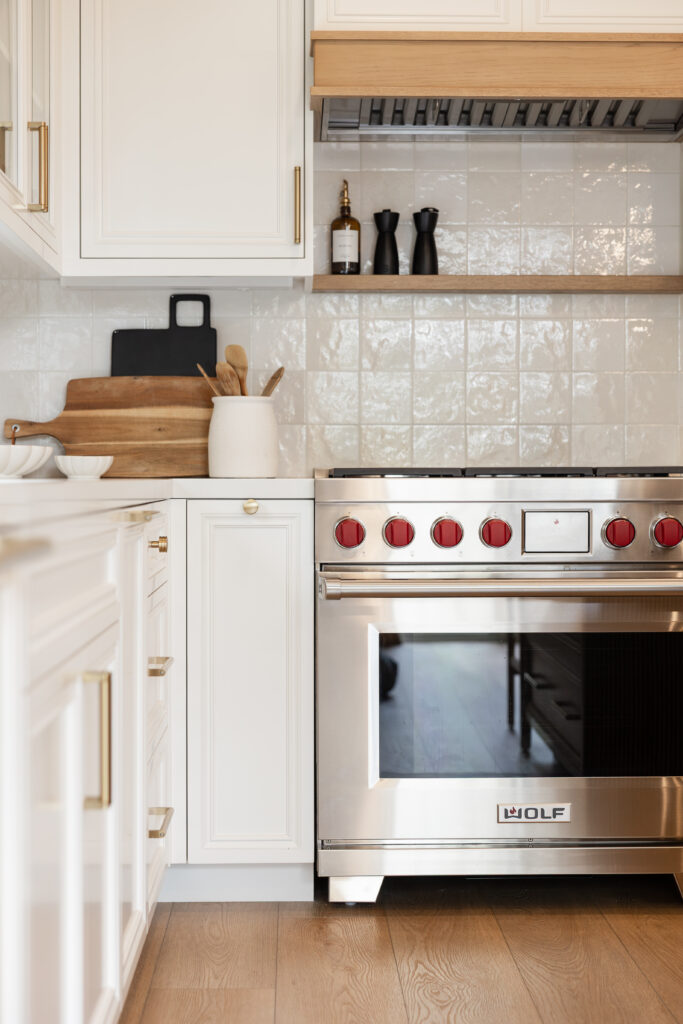
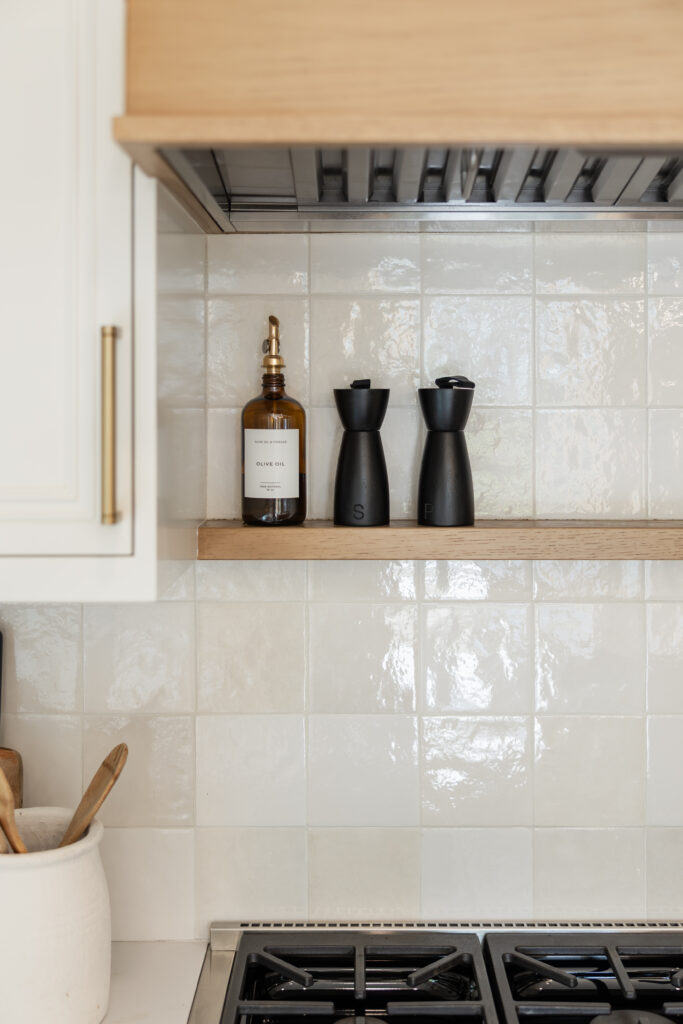
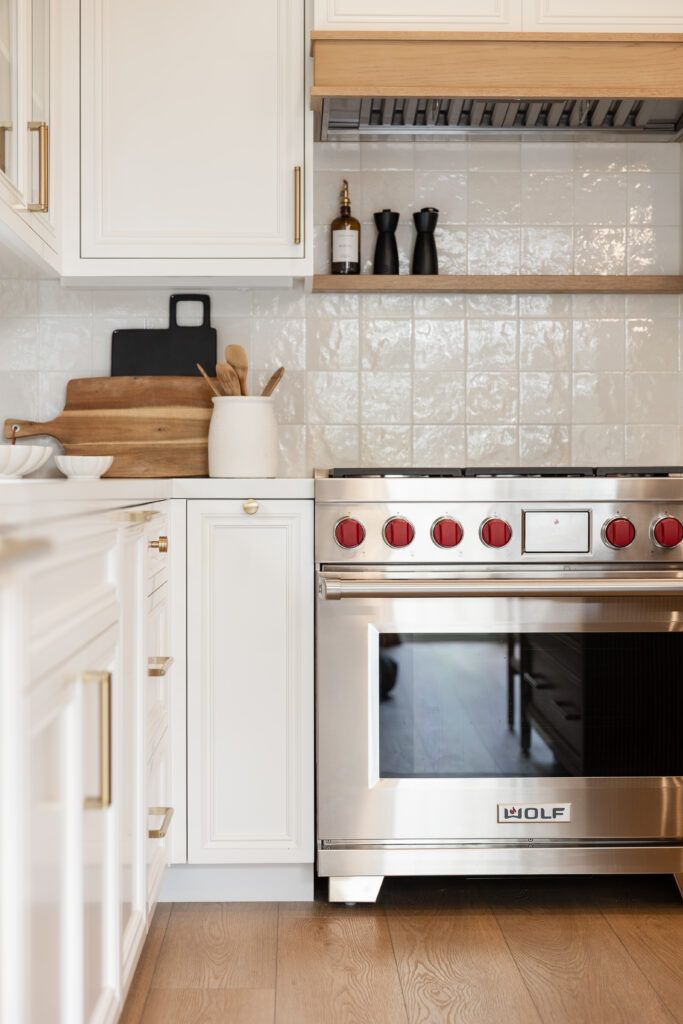
A professional-grade range anchors the cooking zone with the kind of presence that makes a kitchen feel serious without feeling sterile. Flanking cabinetry and open shelving frame it beautifully, creating a focal point that draws the eye from the moment you enter the space. Floating shelves introduce an opportunity for curated display (ceramics, cookbooks, greenery) adding the lived-in warmth that distinguishes a home kitchen from a showroom.
The backsplash tile works quietly but effectively: a subtle texture and tone that adds dimension without competing with the cabinetry, hardware, or the statement range for attention.
One of the most requested features in modern kitchen remodels is storage that actually works not just looks good on paper. This kitchen delivers with dedicated pantry-style cabinetry, thoughtfully placed pull-outs, and a layout that keeps the prep zone clear and the gathering zones open. Appliance garages tuck away countertop clutter. Deep drawers replace traditional base cabinets in the right zones for ergonomic, intuitive access.
The result is a kitchen that handles the chaos of daily life without showing it.
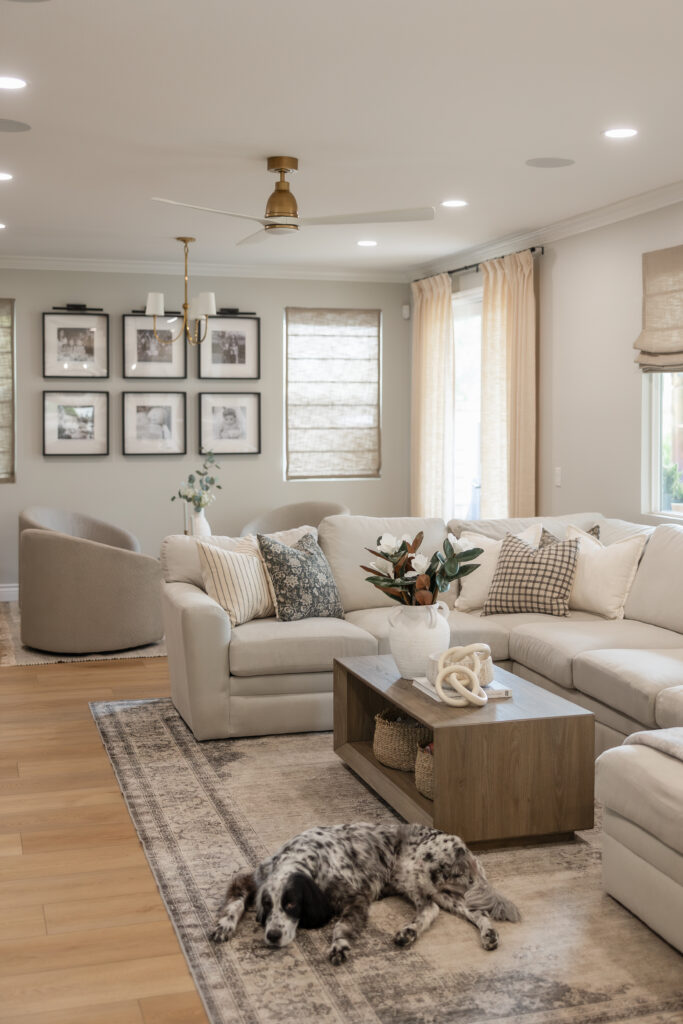
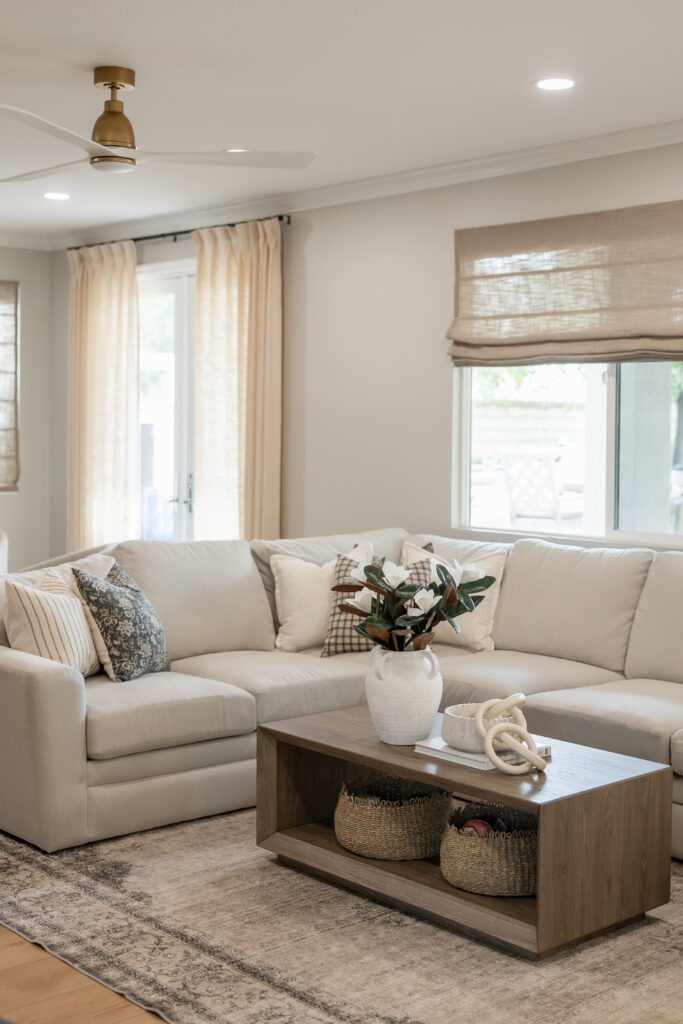
The family room remodel was designed in direct conversation with the kitchen; the two spaces needed to function as one without feeling identical. Where the kitchen leans into architectural structure and material contrast, the family room softens into comfort. Layered seating arrangements in warm neutrals create a space that invites long conversations and lazy weekend mornings in equal measure.
What makes California Transitional design so enduring is its relationship with light, natural light specifically. Both the kitchen and family room were designed to maximize how daylight moves through the space across the day, from the bright morning quality filtering through the kitchen windows to the golden-hour warmth that settles into the family room by late afternoon.
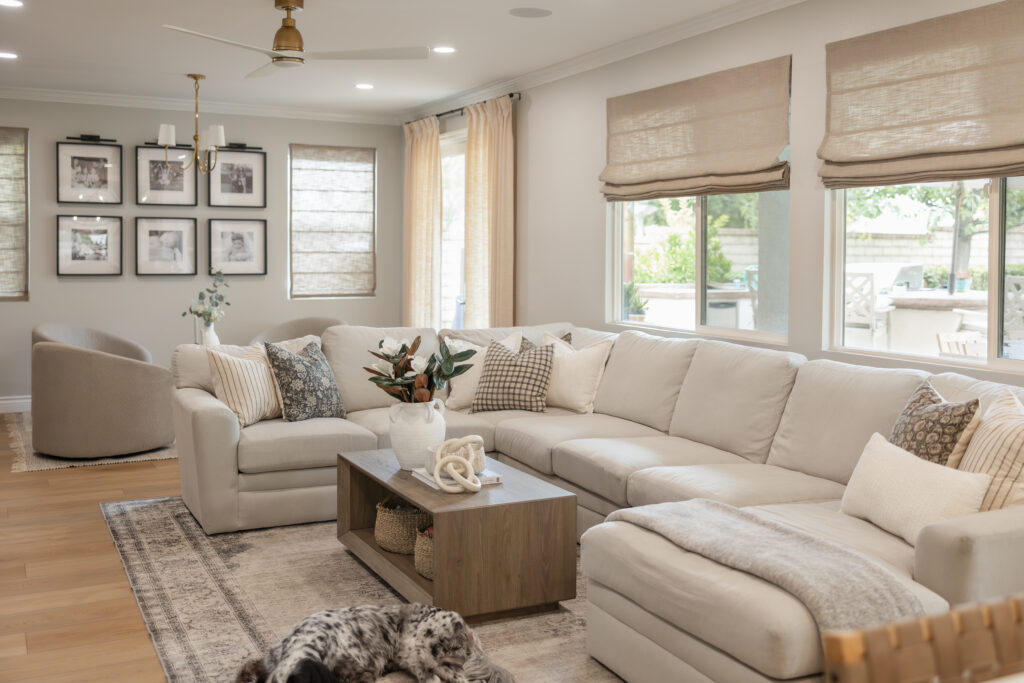
Window treatments are purposefully simple: clean lines that frame the view without blocking it. Hardware that echoes the kitchen accents, threading a connective material detail through both spaces.
In high-end residential design, the difference between a good remodel and an extraordinary one lives in the details, the moments that catch you by surprise even after you’ve lived with them for months.